
Rome is a city that lives in two timelines: the ancient civilization with the Colosseum, and the modern city with hotels and coffee shops. Rome isn’t only a museum frozen in time–it’s a city where the ancient world meets the modern one. If you are looking to see Rome for what it really is, and not just what is on the postcard, here are 10 intriguing facts that tend to fly under the radar when you first visit.
- Rome has over 2,500 curved drinking fountains known as nasoni (“big noses”) that have been known for providing free cold water since the 1870s. They were introduced between 1872 and 1874 to provide clean drinking water to citizens after outbreaks of cholera and typhoid and to improve public hygiene. If you plug the bottom hole with your finger, the water creates a drinking fountain by squirting out of a smaller hole on the top. They are also a ventilation for the city’s water pipes.
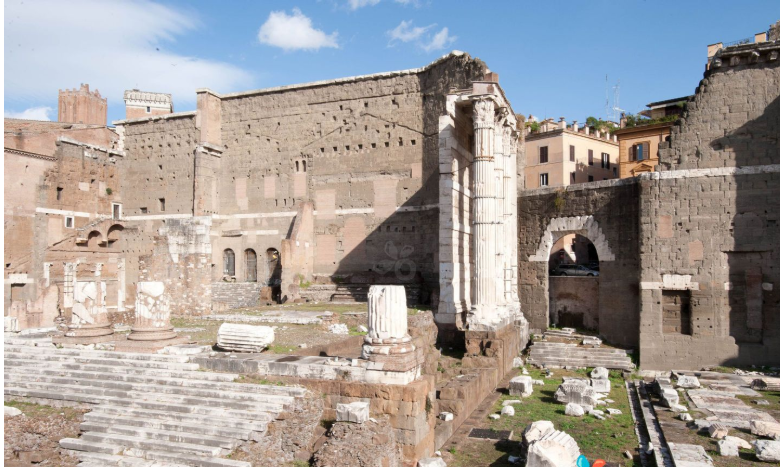
- Rome is 20 feet higher than it used to be. The modern day city of Rome sits roughly 6-10 meters above Ancient Rome, as flooding from the Tiber River and centuries of construction and human activity, as well as the collapse of old buildings, created layers of debris over time that the city would build new foundations over.
- At the Largo di Torre Argentina archaeological site, you will find hundreds of cats at the site where Julius Caesar was assassinated. The Torra Argentina Cat sanctuary is a famous, volunteer-run shelter that houses cats that have been abandoned or rescued.
- In Vatican City, you will find an ATM machine that actually has instructions in Latin, the official language of the Holy See (the governing body). Although the Vatican City state is a young country, the Vatican was intentionally secluded from Rome throughout history, and popes didn’t live there, but at the Lateran Palace and Avignon, France. From 1870 to 1929, Popes refused to leave the Vatican and formed an independent nation in 1929.
- Another lesser-known fact about the Vatican is that the “Vatican Secret Archives” were restricted from the public until 1881, and beneath St. Peter’s Basilica, archaeologists discovered a Roman necropolis from the 2nd century, housing what historians believe is the tomb of St. Peter. Another secret discovery in the Vatican City was the Passesetto di Borgo, an 800-meter elevated passage connecting the Vatican to the Castel Sant’Angelo, which was used as an evacuation center for popes.
- In the middle of a busy intersection is the Pyramid of Cestius, which was built around 12 BC as a tomb for a wealthy Roman Cestius who greatly admired Egyptian culture. It symbolizes the cultural diversity of Rome. Ancient Rome was a profound melting pot, especially during its peak in 27 BCE to 300 CE. Genetic studies have shown that Rome had a great number of immigrants from all around Europe, the Mediterranean, and northern Africa, contributing to a wide, diverse array of cultures.
- The roof of the Pantheon has a massive 9-meter hole called the oculus. While many assume the interior gets flooded during a storm, the floor features 22 tiny drainage holes (almost invisible) that drain the water into an ancient sewer system. Roman concrete was also superior to modern concrete in its durability and resistance to erosion, as its volcanic materials reacted with saltwater to fill cracks and spaces, providing a stronger and sturdier foundation. This is why the Colosseum has survived for so long despite centuries of reconstruction and natural erosion. The Colosseum itself is actually significantly smaller now than it was when it was built, but its foundation remains just as strong.
- Monte Testaccio is a hill that is also an ancient landfill, composed entirely of around 53 million broken amphorae (clay jars) used to transport olive oil to the city in ancient Rome. It’s essentially a 115-foot-tall logistical monument that symbolizes Rome’s engineering advances.
- On the Aventine Hill, there is an unremarkable green door belonging to the Knights of Malta. If you peep through the keyhole, you get a perfectly framed, symmetrical view of the St. Peter’s Basilica dome through a tunnel of manicured hedges. It’s one of the few places where you can see three “states” at once: The Sovereign Military Order of Malta, Italy, and Vatican City.