
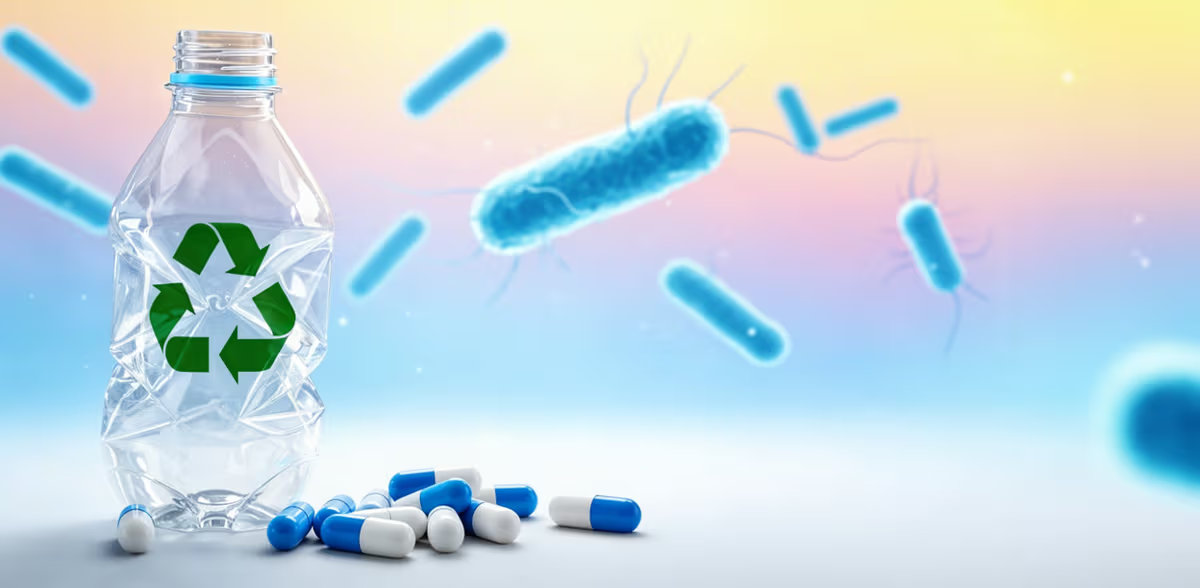
Scientists at the University of Edinburgh have recently developed a method to upcycle plastic bottle waste into L-DOPA, a key treatment for Parkinson’s disease.
Parkinson’s disease is a progressive neurological disorder that impairs coordination and motor function. It is caused by the degeneration of dopamine-producing neurons. A major cause of death in the United States, Parkinson’s disease greatly complicates everyday life, as it is accompanied by symptoms of tremors, slowness, limb stiffness, and issues with balance.
Unfortunately, there is no established cure for Parkinson’s disease. However, there are many different treatments that help in improving daily life and increasing independence in movement. An example is the medication L-DOPA, the gold-standard drug for the treatment of impaired motor function in Parkinson’s disease. L-DOPA, or levodopa, is one of the most widely used treatments for the disease, as it allows disease-addled individuals to increase their dopamine levels and remedy their deficiency. However, the production techniques for the manufacturing of L-DOPA are not very sustainable, as they are heavily reliant on finite fossil fuels.
In a recent study, a method to transform polyethylene terephthalate (PET) plastic waste into L-DOPA was engineered. PET plastic waste is commonly used in water bottles and food packaging, and is a great contributor to global pollution. Nearly 50 million tons of PET plastic are produced annually, but researchers believe that existing recycling processes are not efficient enough to contend with the strain that that PET production puts on them. Because of this, new methods to recycle PET are urgently needed to avoid the accumulation of plastic pollution.
Utilizing an engineered strain of E. coli bacteria, scientists first broke down PET waste into terephthalic acid. PET plastic was obtained from both industrial waste and a used plastic bottle. Then, using a series of biological reactions, terephthalic acid molecules were formed into L-DOPA.
According to researchers, this is the first time a neurological medication has been created using plastic waste. This study demonstrates the potential of biotechnology to create cleaner, more efficient ways of producing essential medicines. Additionally, it calls attention to the vast, untapped source of carbon that plastic waste contains, which could possibly inspire additional breakthroughs in the field of developing treatment that could also decrease pollution. At the University of Edinburgh, the scientists’ next goals are to further develop and assess the process, specifically focusing on affordability, as they hope to move it towards industrial application.