When the last tree has been cut down, the last fish caught, the last river poisoned, only then will we realize that one cannot eat money.
– Alanis Obomsawin
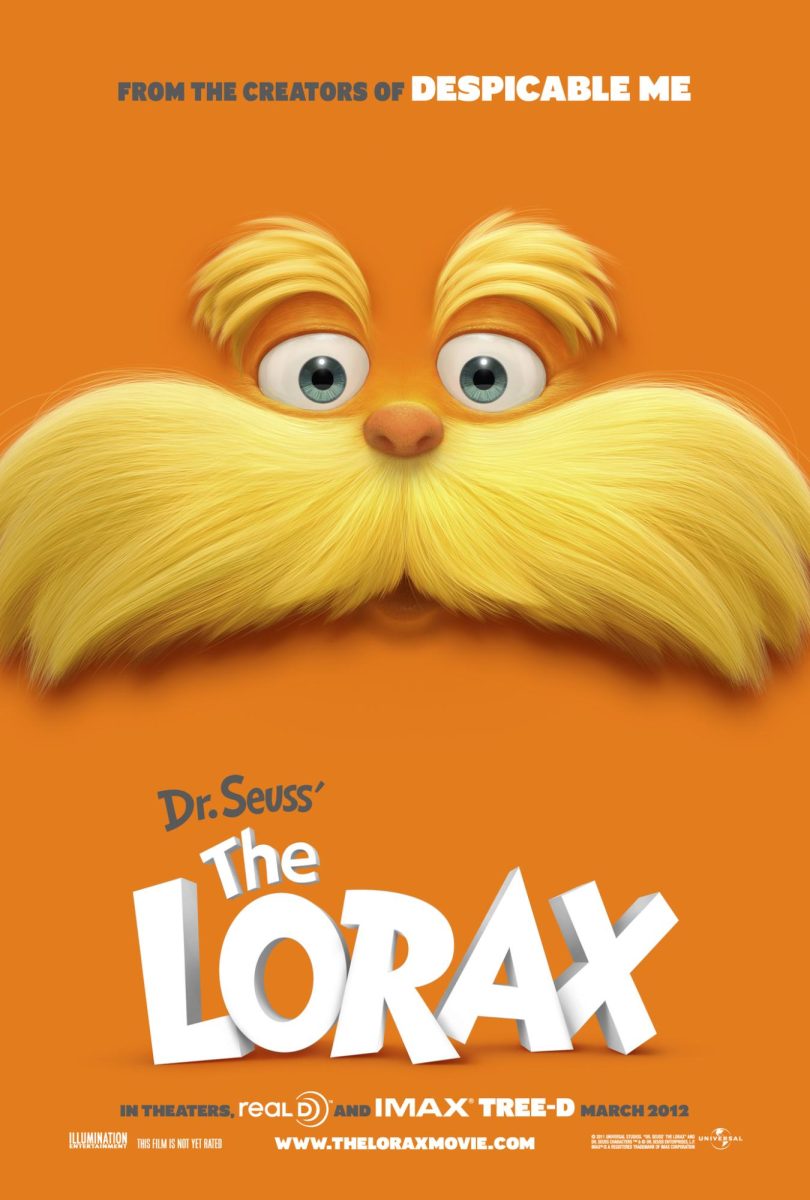
When I recently rewatched The Lorax, its straightforwardness stunned me. It was a late Saturday night, and my sister and I were watching the film alone at home, way past her bedtime. From the first musical sequence in the film, I realized how I completely missed the dystopia that the town of Thneedville was. The yards and gardens were made solely of superficial trees; the pollution was so awful that one kid literally started glowing, and what shocked me the most was that clean air was sold for a profit to the citizens of Thneedville by billionaire Aloysius O’Hare. The same billionaire who also had constant surveillance in the town to ensure that nobody leaves. And worst of all, the citizens remain blissfully ignorant, which is seen in the line, “In Thneedville/We don’t want to know/Where the smog and trash/And chemicals go.” Instead of attempting to understand the issue, the citizens deny the idea of any flaws and proceed to call Thneedville “perfect.”
Unfortunately, this is also an issue seen in real life. People ignore pollution because it doesn’t affect them directly, constantly saying, “Who cares if a few trees are dying?” This quote is also directly stated in The Lorax to show how people let their own morals fall away, let their own surroundings deteriorate to nothing, in the greedy pursuit of wealth. The Onceler demonstrates this greedy pursuit perfectly, as the more his product, the Thneed, sells, the more he is willing to forget the promises he made and the friends he has living in the forest. In the song “How bad can I be?”, we see the Onceler constantly making excuses for why he has to cut down more trees, even stating that “[he’s] just building the economy.” At this point in the film, he already has an uncountable amount of money, showing how he really doesn’t need more. When the forest is in grave danger, the Lorax asks him if he “[filled] that hole deep down inside [him] or [does he] need more.” This is the first reality check that the Onceler is given, but he doesn’t change his mind. When he finally realizes his mistake, it’s too late, as every single last tree is cut down, leaving the animals he once called his friends no choice but to migrate. And with this lack of trees, there is a lack of clean air, resulting in Aloysius O’Hare starting to sell it. In fact, just like the Onceler, he wants even more wealth than he already has, so he wants to start polluting the air more so there is more demand for his product.
But the film doesn’t end in this depressing way. The Onceler, feeling guilty and regretful, gives the main character, Ted, the last tree seed. When Ted responds pessimistically, saying that the one seed won’t make a difference, the Onceler states what I believe to be the most important line in the movie: “Unless someone like you cares a whole awful lot, nothing is going to get better.” This line carries hope that contrasts the rest of the movie’s tone. From despair to hope, the rest of the movie focuses on advocacy and how much difference one person can make. You see, by stating “someone like you,” the movie shows how even younger audiences can make a huge difference, because it’s the small and meaningful steps that take you anywhere.
The Lorax serves as a warning for the future and a lesson to the youth. The film masterfully incorporates the effects of greed, ignorance, and propaganda while also showing the youth that something can always be done. It shows us how the environment is real and important, and we should treat it with respect. Because after all, “When the last tree has been cut down, the last fish caught, the last river poisoned, only then will we realize that one cannot eat money” (byquotesresearch).
Work Cited
byquoteresearch, Posted. “Quote Origin: When the Last Tree Is Cut down, the Last Fish Eaten, and the Last Stream Poisoned, You Will Realize That You Cannot Eat Money.” Quote Investigator, 2 Mar. 2025, quoteinvestigator.com/2011/10/20/last-tree-cut/.