
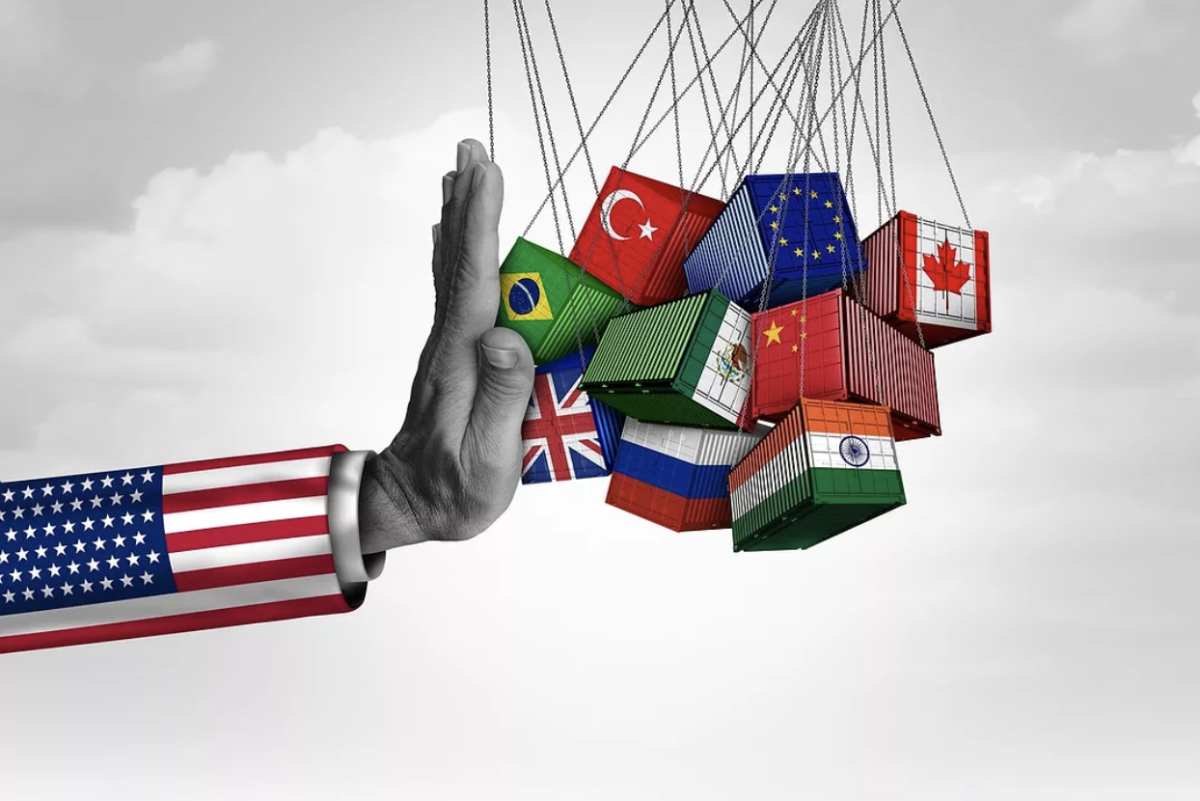
Did you know that the price of your morning coffee, a new outfit, or even a planned purchase for a new car is secretly being inflated? The truth is, it’s not just inflation; it is the result of an important economic tool–the tariff–which is actually centuries old, and it’s making everyday goods significantly more expensive for households. As the United States sees its highest tariff rate in nearly a century, consumers face effective average price increases of thousands of dollars of lost purchasing power annually.
In the high-stakes world of international trade, a single policy decision can trigger a ripple effect that touches every corner of the globe. The recent resurgence of aggressive tariff policies has ignited a new era of trade wars, with nations imposing retaliatory taxes that stifle commerce and strain diplomatic relations. The core of the conflict is a high-stakes bet: can tariffs protect domestic industries and create jobs, or do they risk an economic collapse by raising prices and damaging the world economy? We explore the current landscape where the only certainty is uncertainty, and the outcome remains to be seen.
President Trump has imposed International Emergency Economic Powers Act (IEEPA) tariffs on US trading partners, including China, Canada, Mexico, and the EU. In addition, he has threatened and imposed Section 232 tariffs on autos, heavy trucks, steel, aluminum, lumber, furniture, semiconductors, pharmaceuticals, and copper, among others.
The Trump tariffs amount to an average tax increase per US household of $1,200 in 2025 and $1,600 in 2026.
Under the tariffs imposed and scheduled as of November 1, the weighted average applied tariff rate on all imports rises to 18.2 percent, and the average effective tariff rate, reflecting behavioral responses, rises to 13.1 percent—the highest average rate since 1941. The Trump tariffs are the largest US tax increase as a percent of GDP (0.54 percent for 2025) since 1993, surpassing the tax increases enacted under President Barack Obama and President George H.W. Bush.
Trump’s imposed tariffs will raise $2.4 trillion in revenue over the next decade on a conventional basis and reduce US GDP by 0.6 percent, all before foreign retaliation. Accounting for negative economic effects, the revenue raised by the tariffs falls to $1.8 trillion over the next decade. The Trump tariffs threaten to offset much of the economic benefits of the new tax cuts, while falling short of paying for them.
The US Supreme Court will soon decide whether the president’s emergency powers under IEEPA include the power to impose tariffs.
Historical evidence and recent studies show that tariffs are taxes that raise prices and reduce available quantities of goods and services for US businesses and consumers, resulting in lower income, reduced employment, and lower economic output.
Tariffs escalate global conflict by raising the cost of goods, disrupting supply chains, and prompting retaliatory measures from other countries, which can lead to a cycle of escalating trade wars with negative economic impacts on all involved. They also reduce consumer purchasing power, harm industries dependent on international trade, and potentially weaken overall economic growth for both the imposing country and its trade partners.
Tariffs disrupt established global supply chains by increasing costs for imported components and finished products. This can force businesses to seek new, potentially less efficient, suppliers, which can harm economic growth. Job losses: While proponents argue tariffs protect domestic industries, economists note that the overall impact is often negative, with job losses in industries that use imported goods outweighing any gains in protected sectors. Tariffs act as a tax on imported goods, leading to higher prices for consumers and businesses. This can lower consumer purchasing power and reduce demand for goods and services. When one country imposes tariffs, other nations tend to retaliate with their own tariffs on the first country’s exports, creating a tit-for-tat cycle that further escalates tensions. Disruption of markets: The resulting trade war can destabilize international markets and create uncertainty for businesses and investors. Industries that are major exporters or rely heavily on imported parts and materials are particularly vulnerable to these retaliatory measures and supply chain disruptions, as seen in the agriculture, automotive, and technology sectors.
The future of world peace with tariffs is uncertain, as they can both be used as a tool for negotiation and create significant economic instability and political tension. While some argue that tariffs can pressure nations into changing their behavior on national security issues, their broader use is linked to reduced global economic growth, disrupted supply chains, and a heightened risk of conflict. Tariffs may also push countries to find alternative trading partners and strengthen regional economic blocs, leading to a more fragmented and less stable global trade system.
Ultimately, the debate over tariffs provokes us to ask a critical question: when does the pursuit of national interest begin to harm its citizens, and at what point does the cost of a trade war outweigh the potential benefits of a trade surplus?