
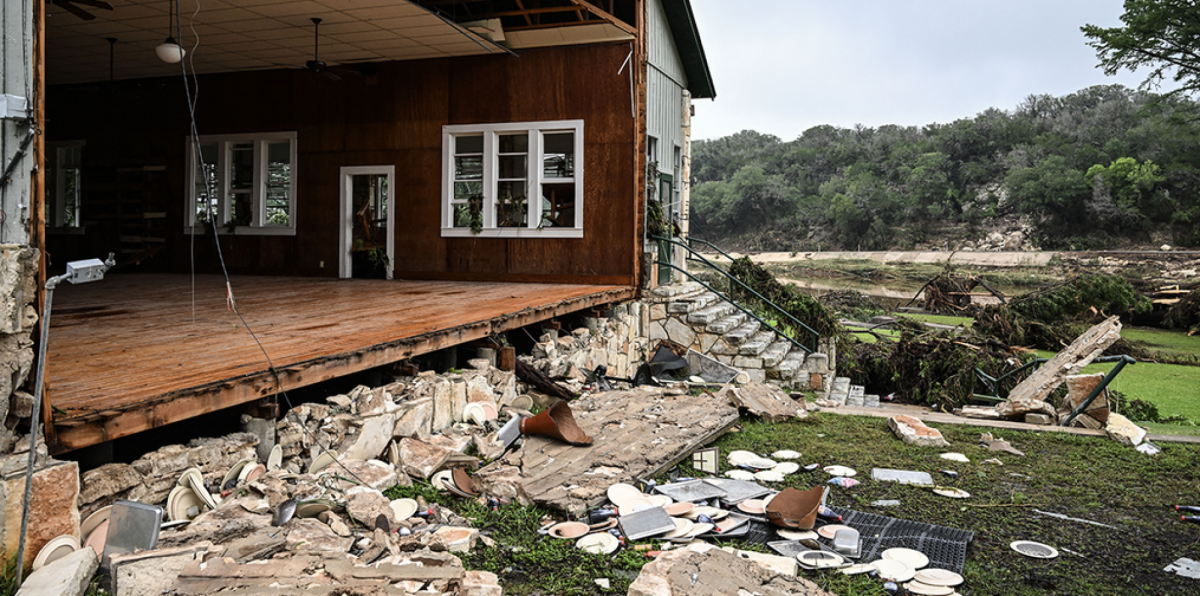
In the early morning of July 4th, the devastating and tragic Camp Mystic flood occurred in Hunts, Texas near Kerrville. Camp Mystic is a private Christian summer camp for girls located in the Texas Hill Country along the Guadalupe River. The Camp Mystic flood was caused by 7 inches of heavy rain in 4 hours, leading the Guadalupe River to surge 26 feet in just 45 minutes. At Hunt, the river’s flow rate went from flowed at a rate of 10-20 cubic feet per second to a reported 120,000 cubic feet per second. To visualize how fast that is, one cubic foot is around 7 gallons. This meant that nearly 840,000 gallons of water flowed every second. The disastrous flood took the lives of 27 people, and just like that, Kerr County’s flood death toll had risen to 84. Many people have argued that this tragedy could have been prevented and was avoidable, while others argue it was inevitable because some of the camps were located inside the floodway (Areas very close to the river that are subject to high velocities during a flood).
How can we prevent something like this from happening?
The lack of studying floodplains before the construction of infrastructure can lead to the risk of homes getting destroyed without even realizing it. We need better flood alert systems in place that can alert the public of potential flooding way before the flooding occurs. National Weather Service forecasters could have done a better job in predicting the severity of flooding at Camp Mystic. The county’s emergency management officials could have done a better job of communicating with Camp Mystic to warn them of a deadly flood. Additionally, the watershed of the Guadalupe River has a fast response time to rainfall, causing flash floods. Therefore, advanced early flood warning systems or the use of AI or machine learning to understand storm patterns and predict floods need to be explored.
The July 4th Camp Mystic flood disaster is a heartbreaking reminder of nature’s deadly power and the crucial factor of early preparedness in advance. Although the deluge and the unseasonal overflow of the Guadalupe River did not seem imminent, the loss of 27 young lives in a matter of seconds raises serious questions regarding preventable failures in flood warning, communication, and planning. To prevent future disasters, we need to give top priority to the study of floodplains prior to construction along rivers, invest in state-of-the-art early warning systems, and take advantage of new technologies such as AI to be able to predict and react better to extreme weather. Lives do not just depend on nature’s vagaries, but also on our capacity to anticipate them.
Sources
https://www.nytimes.com/interactive/2025/07/07/us/texas-flooding-map-guadalupe-river.html#
https://pmc.ncbi.nlm.nih.gov/articles/PMC9713350/
https://www.texastribune.org/2025/07/05/camp-mystic-texas-hill-country-flooding-rescue/