
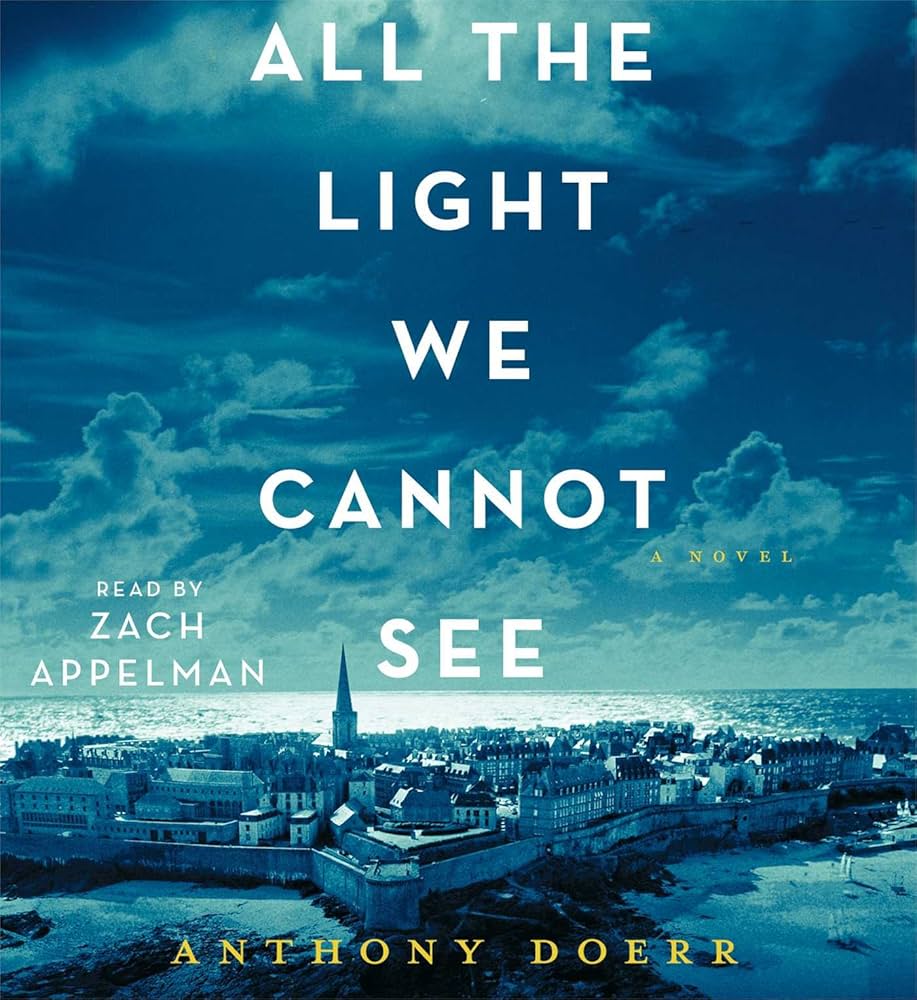
Author’s Note: This analysis contains spoilers to All the Light We Cannot See.
What is the first thing you think of when you hear the word “light”? Is it the physical brightness of the perceivable world? A sort of symbol of hope that tunnels through a cloak of darkness? Is it the invisible motion of electromagnetic waves throughout space? Having read Anthony Doerr’s All the Light We Cannot See over the summer, my understanding of “light” in the physical, scientific, and literary means has been significantly changed. The story follows Marie-Laure and Werner and their navigation through World War II as citizens of warring countries, illustrating Doerr’s greater message: the frailty of prejudice and the necessity of listening to new perspectives.
Werner, a member of the Hitler Youth who joins the military, makes incredibly misled decisions throughout the story. However, Doerr intentionally delineates him as an anti-hero, eliciting sympathy for his lost youth and corruption. Specifically, we see his “light” as his love for science. It is, however, both a source of good and evil throughout All the Light We Cannot See. Although his sheer intelligence and love for electromagnetism lets him fix an old radio for his sister–Jutta–to use, it is also what ultimately causes him to enlist in the Nazi military. We see that the development of Jutta and Werner’s relationship parallel Werner’s sense of humanity. The letters Werner receive from Jutta act as his final connection to humanity and will to use his talents for good; as he experiences more at war and loses his hope in humanity, he withdraws not only from his conversations with Jutta but also from any semblance of critical thinking, allowing him to commit atrocities with the “light” that he used to use for the benefit of others. His complicity in Nazi propaganda inevitably leads to this withdrawal of morals. In this sense, we see “light,” a symbol of Werner’s love for electronics and mathematics, as not only the thread that leads his character development but a critical part of his existence. Through this development, we see Doerr use the symbol of light to represent an internal intellectual brightness that can be dulled through propaganda rather than a physical light that is burnt out, contributing to his greater message of our necessity to understand perspectives we disagree with.
Similarly, Marie-Laure’s experience as a part of the French resistance to Nazi occupation is led by “light.” Being blind, “light” for her encapsulates more than a specific talent. Her “light”—and likewise reason for her continued hope in survival—comes from an internal strength. Whether it be overcoming the challenges of being sightless or recognizing deceit and encrypted messages in places most people wouldn’t look, Marie-Laure’s ability to discern and act despite obstacles enables her to navigate war. Further, we see this strength of hers as more than a defensive tool; it’s through this moral compass that she decides to join the French resistance with her great-uncle, Etienne. Doerr intentionally cloaks her “light” with her physical ailments to emphasize a larger theme throughout All The Light We Cannot See: the value of fortitude over brute force. Marie-Laure’s ability to channel resilience through difficulties illustrates the “light” of her quiet patience. Using the symbol of light as the fabric of Marie-Laure’s resilience, Doerr redefines “light,” this time as hope within the bleak. Doerr uses the symbol of light throughout both Marie-Laure and Werner’s character development to intentionally parallel their experiences, presenting them as individual humans rather than emissaries of their respective countries. Ultimately, it contributes to a greater purpose of the novel–illustrating the war through an interpersonal lens and thus dissolving the apathy of partisan views.
The symbol of light is not only defined through characters, however. Through specific plot points, such as the Sea of Flames and the capture of Marie-Laure’s father, Doerr executes the desperation ensued by the pervasiveness of war and likewise uses the symbol of light to mimic an illusory promise. The Sea of Flames represents a promissory “light” that deceives Von Rumpel, a Nazi jewelry appraiser. Von Rumpel, an absurd and childish grown adult, represents the downward spiral of someone who realizes that there is nothing tangible or logical to explain what is happening. We see “light” representing unfulfilled promises once again when Marie-Laure’s father tells her he will return to her. Instead, he is arrested and sent to a work camp. Marie-Laure maintains a hope that he will return to her throughout and even after the war. However, just as Marie-Laure’s father never returned to her, the Sea of Flames was unattainable to Von Rumpel. This usage of “light” as an intangible fantasy is Doerr’s method of conveying the desperation of hope and how war–in every which way–affects those within its setting. Thus, Doerr once again redefines “light” as an intangible spirit that tempts the hopeless.
It is through these three significant aspects of the novel that my perception of the most elemental aspect of nature was most notably changed. Doerr’s repetitive usage of “light” is more than a literary technique; it’s a mode of thinking. It’s a statement that, in the same way there is no single definition of “light,” there is no unique way to define war. Within our interconnected world it’s easy to become polarized on political and social issues. However, just as there is never one perspective that triumphs another within the novel, there is never one way to define what is the correct or incorrect opinion to have on modern issues. If anything, Doerr’s novel is a condemnation of prejudice and a call for readers to understand the whole before touting the half.